Project
Turning scientifically validated carbon data into actionable insights.

Objective
We aims to achieve carbon neutrality by 2050, implementing a
wide range of policies and technologies.
686.3 MtCO2
net emissions in 2018
436.6 MtCO2
2030 target emissions
Net Zero
2050 goal


Motivation
Getting carbon neutrality right starts with accurate data
on emissions and absorptions.
Emission SourcesEnergy, Agriculture, Industry, Building, Wastewater, Transport
Emission SinksForests, Soil & Biochar, Urban Green Spaces
Problem
Conventional tools fall short in tracking the real dynamics of carbon flows across key sectors,
due to insufficient spatial and temporal detail.
The way forward is clear: new approaches that enable precise, high-resolution spatio-temporal carbon inventories
Solution
The Korea Carbon Project addresses this challenge by developing a Korean hybrid inventory
through cross-disciplinary integration.
Bottom-up approach
Statistical Activity Data
Proxy-based downscaling (energy, building, transport, wastewater)
Top-down approach
Observations and Modeling
Multi-scale modeling (ground, aerial, satellite)
Hybrid Analysis
Leveraging data assimilation, big data, and machine learning through hybrid approaches
Korean Hybrid Inventory
Calculating emissions and absorptions at 1 km spatial and temporal resolution.
Strength
Detailed and Consistent Data
Leveraging big data and AI, we provide nationwide net emission estimates at 1 km resolution and monthly scale, spanning all five major sectors and 20 subsectors of the National GHG Inventory.
Accurate and Reliable Data
We scientifically validate monthly net carbon emissions through observation networks and modeling techniques.
Carbon Insights Designed for Real-World Use
Local-level spatial data empowers local governments to design and implement carbon neutrality policies that reflect regional characteristics and administrative boundaries.
Roadmap
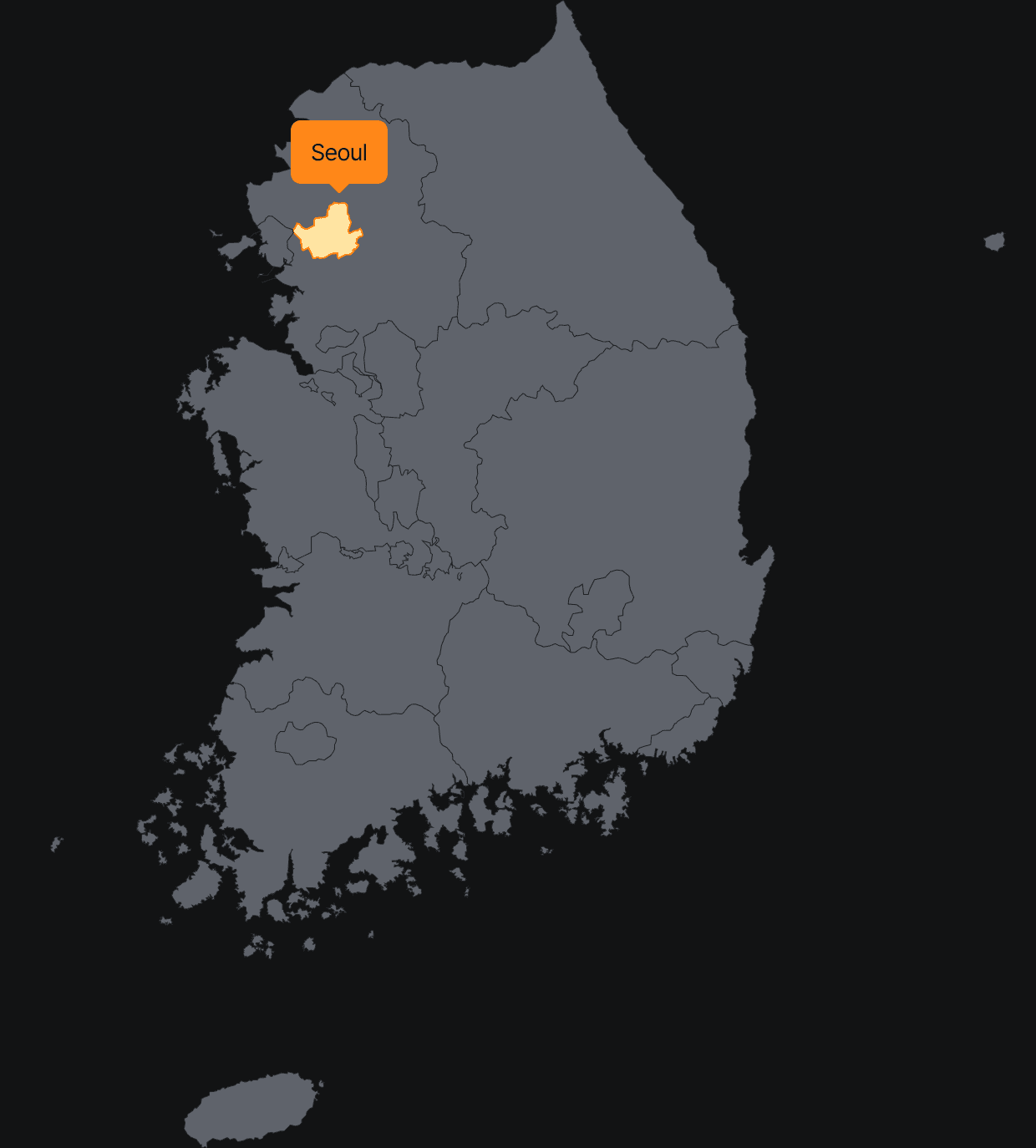
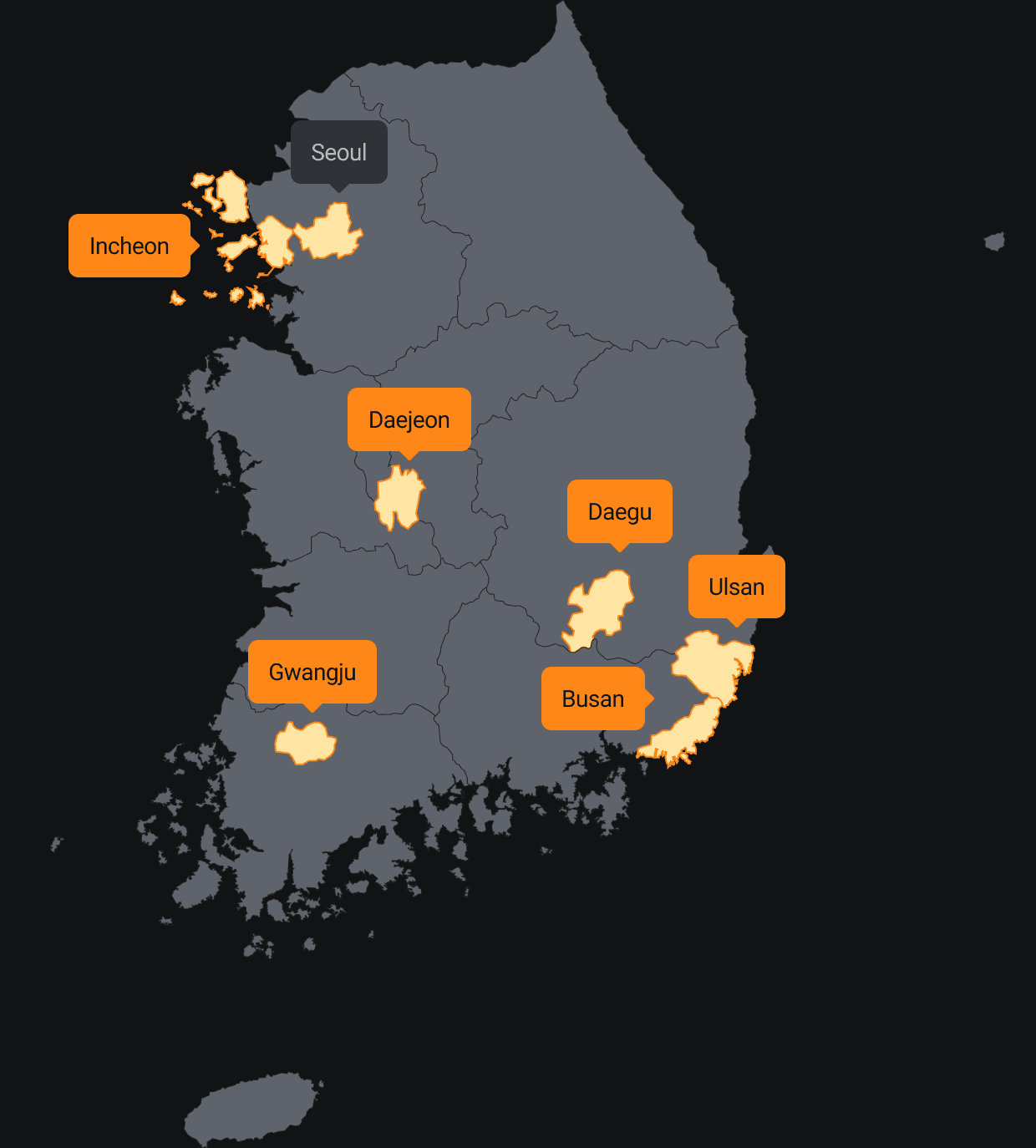
We begin in Seoul and scale up to build a nationwide greenhouse gas spatial map.
KCP Platform
Anyone can easily access accurate information on
Korea’s carbon emissions and absorptions
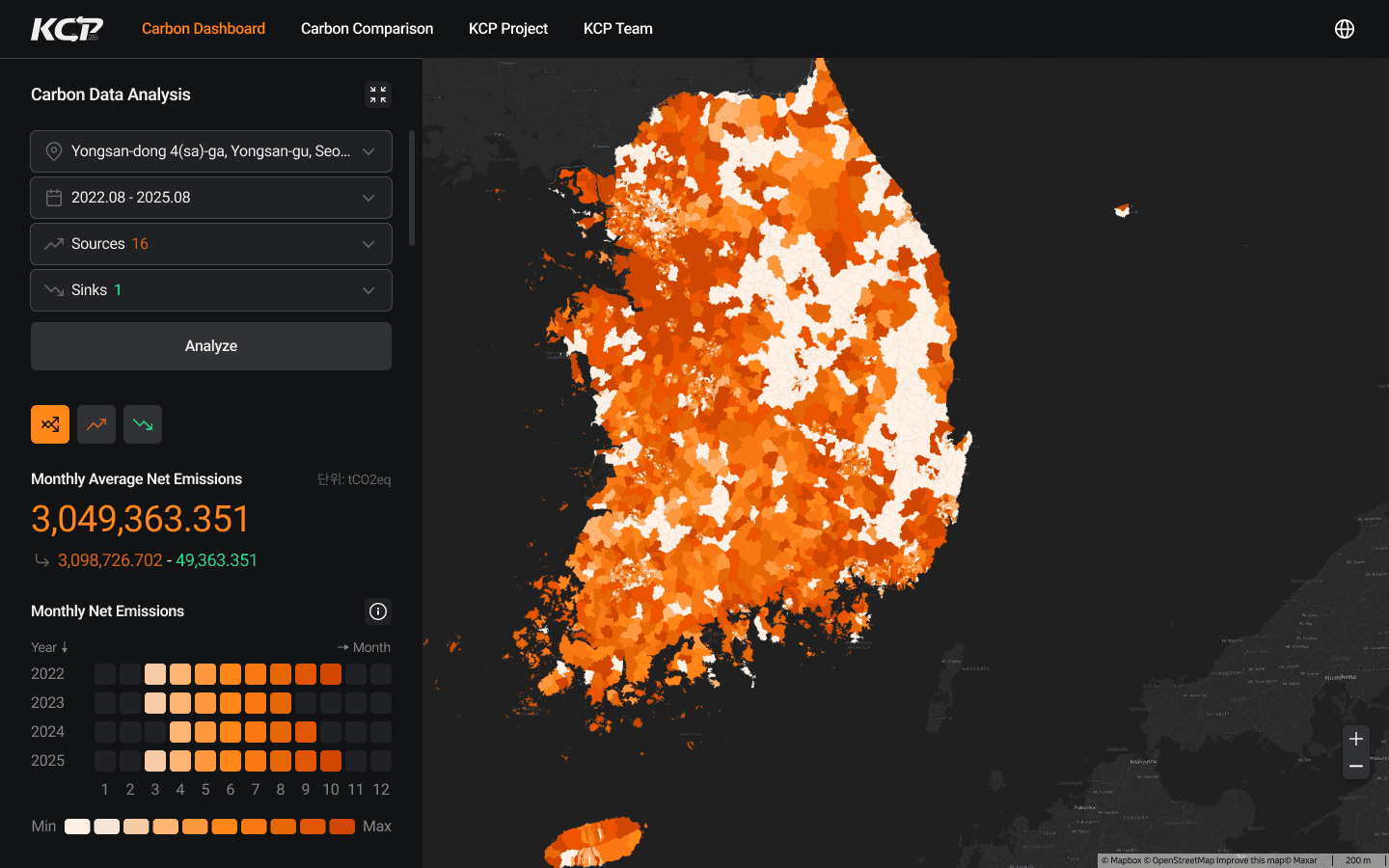
On the KCP platform, observation-based GHG maps combine statistical activity data with observational and modeling sources, delivering accurate emissions and absorptions at 1 km spatio-temporal resolution.
 Go to Carbon Dashboard